Is Lane Splitting Legal in Texas?
No, lane splitting is illegal in Texas. Since September 1, 2023, Texas Transportation Code § 545.0605 explicitly prohibits motorcyclists from riding between lanes of traffic or passing vehicles while sharing the same lane. Governor Greg Abbott signed House Bill 4122 into law in June 2023, ending years of legal ambiguity around this practice in the Lone Star State.
With that said, if you were injured in a motorcycle accident while lane splitting, or if another driver hit you and is now blaming lane splitting, don’t assume your case is hopeless. Texas uses a modified comparative fault system, meaning you may still recover compensation even if you share some responsibility for the crash. At Varghese Summersett, our personal injury attorneys have helped motorcycle accident victims across Fort Worth, Dallas, Houston, and throughout Texas recover the money they need to move forward with their lives.
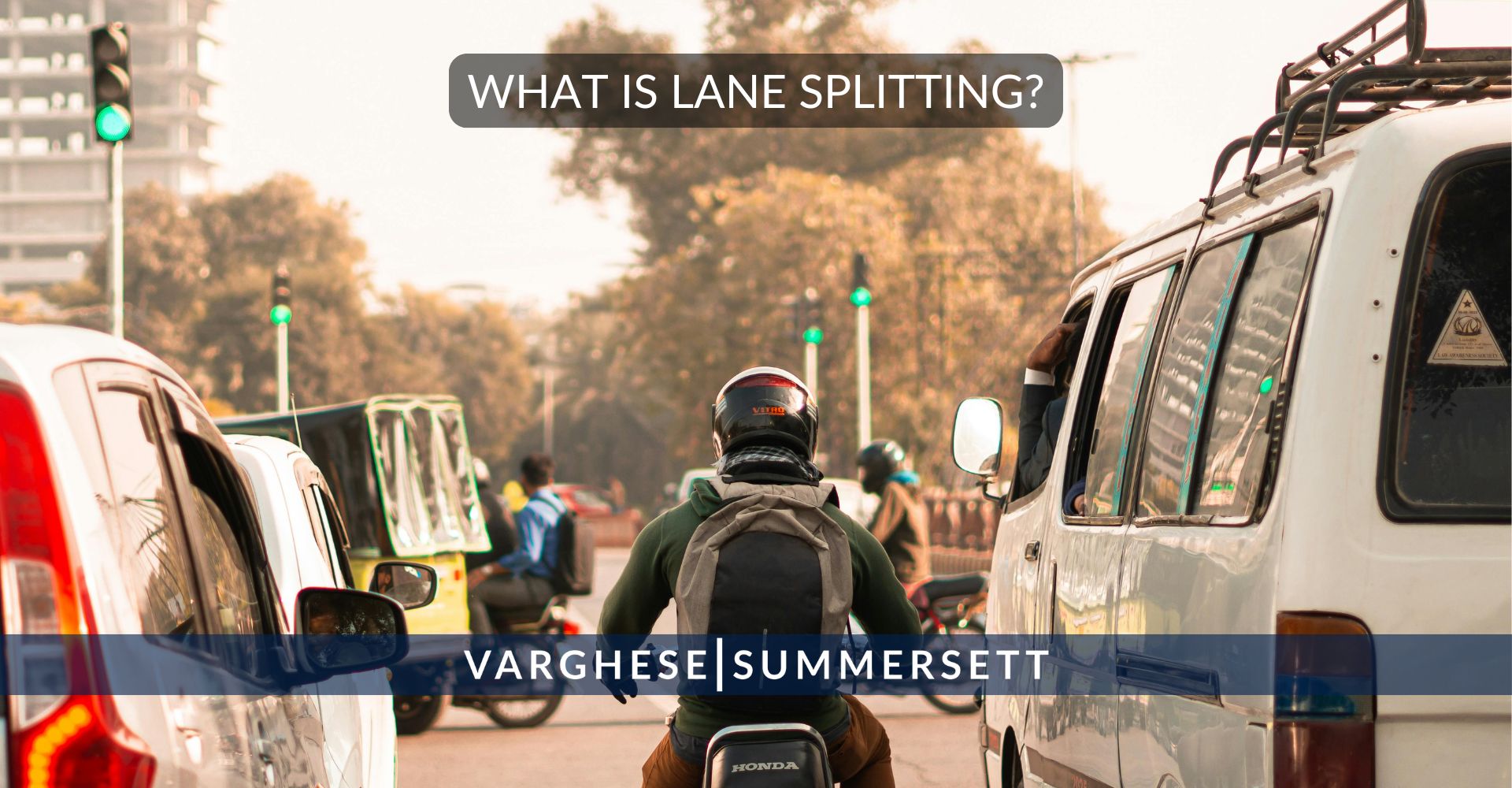
What Is Lane Splitting?
Lane splitting occurs when a motorcyclist rides between two lanes of traffic moving in the same direction. You’ve likely seen this on congested highways, where a motorcycle weaves between cars sitting in bumper-to-bumper traffic. Riders sometimes call this practice “white-lining” or “stripe-riding” because the motorcycle travels along the lane divider markings.
Lane splitting differs from two related practices:
Lane filtering happens when a motorcyclist moves between stopped vehicles, typically at a red light, to reach the front of the line. While some states allow this at low speeds, Texas prohibits it.
Lane sharing is when two motorcycles ride side by side in the same lane. This practice remains legal in Texas under Transportation Code § 545.0605(a)(2), as long as both riders agree and they don’t impede traffic.
Why Texas Banned Lane Splitting
Before 2023, Texas law didn’t specifically address lane splitting. The practice existed in a legal gray area where officers used their discretion to cite riders under broader traffic laws like reckless driving or improper lane usage. House Bill 4122 eliminated that uncertainty.
Texas lawmakers cited several safety concerns when passing the ban. Most Texas drivers don’t expect motorcycles between lanes, which increases collision risk. Texas highways often have narrower lanes than states where lane splitting is permitted, like California. The state’s varying weather conditions, including sudden rain and occasional ice, create additional hazards for motorcyclists maneuvering in tight spaces.
Research on lane splitting safety remains mixed. A UC Berkeley study of California accidents found that lane splitting at moderate speeds appeared no more dangerous than remaining in traffic. However, Texas legislators determined that the risks outweighed potential benefits given the state’s road conditions and driver expectations.
Penalties for Lane Splitting in Texas
Motorcyclists caught lane splitting in Texas face several potential consequences. The most common is a traffic citation with fines typically ranging from $175 to $300, depending on the county. Repeat violations or lane splitting at high speeds could result in reckless driving charges, which carry fines up to $200, possible license suspension, and even jail time for severe offenses.
Beyond immediate penalties, a lane splitting citation can affect your insurance rates. Insurers view traffic violations as evidence of risky behavior, which often translates to higher premiums. The long-term cost of increased insurance may exceed the original fine by thousands of dollars.
The only exception to Texas’s lane splitting ban applies to police officers performing official duties. All other motorcyclists must follow the law regardless of traffic conditions.
How Lane Splitting Affects Your Motorcycle Accident Claim
If you were injured while lane splitting, the fact that you violated Texas traffic law will affect your personal injury case, but it won’t necessarily destroy it. Texas follows a modified comparative negligence rule under Civil Practice and Remedies Code § 33.001, which allows injured parties to recover damages as long as they’re not more than 50% responsible for the accident.
Insurance companies will absolutely use lane splitting against you. They’ll argue that your illegal behavior caused or contributed to the accident and use that to reduce your payout or deny your claim entirely. What they won’t tell you is that their insured driver may have also violated traffic laws or acted negligently in ways that contributed to the crash.
Consider this scenario: You were lane splitting at 25 mph through slow traffic when a driver changed lanes without signaling or checking blind spots, striking your motorcycle. Yes, you were breaking the law by lane splitting. But that driver also broke the law by failing to signal and failing to yield. A jury might find you 40% at fault for the accident and the driver 60% at fault. Under Texas law, you could still recover 60% of your damages.
Our attorneys recently represented a motorcyclist in Tarrant County who was lane splitting when a distracted driver drifted into his path while texting. The insurance company initially denied the claim, citing our client’s illegal lane splitting. Through investigation, we obtained the driver’s phone records showing active text messaging at the time of the crash. We negotiated a settlement that covered our client’s $47,000 in medical bills and provided additional compensation for lost wages and pain and suffering.

Proving Fault When Lane Splitting Was Involved
Building a strong case after a lane splitting accident requires demonstrating that the other party’s negligence played a significant role in causing the crash. Evidence that can help establish shared or primary fault by another driver includes:
Failure to signal lane changes. Texas law requires drivers to signal at least 100 feet before changing lanes. If a driver cut you off without warning, that’s evidence of negligence regardless of whether you were lane splitting.
Distracted driving. Phone records, witness statements, and dashcam footage can prove a driver was texting, adjusting GPS, or otherwise distracted when they hit you.
Intoxication. If the other driver was under the influence of alcohol or drugs, that significantly shifts fault away from you.
Traffic violations by the other driver. Speeding, running red lights, or other violations demonstrate careless behavior independent of your lane splitting.
Road conditions or design defects. In some cases, dangerous road conditions or poor highway design may share responsibility for an accident.
Witness testimony matters significantly in these cases. Other motorists, passengers, or bystanders who saw the accident can corroborate your account of what happened. Surveillance cameras from nearby businesses or traffic monitoring systems may also capture the collision.
What to Do After a Lane Splitting Accident in Texas
The steps you take immediately after a motorcycle accident can significantly impact your ability to recover compensation. Even if you were lane splitting, protect your rights by following these guidelines:
Stay at the scene unless you need emergency medical transport. Leaving the scene of an accident involving injury or significant property damage is a criminal offense in Texas.
Call 911 and request police and medical assistance. Even if your injuries seem minor, adrenaline can mask serious problems. Request that officers create an official accident report.
Document everything. Take photos of the accident scene, vehicle positions, damage to your motorcycle, road conditions, and any visible injuries. Capture the other vehicle’s license plate, make, and model.
Collect witness information. Get names and contact details from anyone who saw the accident. Their testimony could prove valuable later.
Don’t admit fault. Avoid saying “I’m sorry” or discussing your lane splitting with the other driver, passengers, or the police beyond basic facts. Statements made at the scene can be used against you later.
Seek medical attention within 24 hours, even if you feel fine. Some injuries, including traumatic brain injuries and internal bleeding, may not show symptoms immediately. Medical records linking your injuries to the accident also strengthen your claim.
Contact a motorcycle accident attorney before speaking with any insurance company. Insurance adjusters are trained to minimize payouts, and they’ll look for anything you say that might reduce your compensation.

Why Motorcycle Accident Claims Require Experienced Legal Representation
Motorcycle accident cases differ from typical car crashes in several ways that make experienced legal representation particularly valuable.
First, motorcyclists often suffer more severe injuries due to the lack of protective barriers that cars provide. Broken bones, road rash, spinal cord injuries, and traumatic brain injuries are common, leading to significant medical expenses and long recovery times. The stakes in these cases are simply higher.
Second, many people harbor biases against motorcyclists. Jurors and insurance adjusters sometimes assume that riders are reckless or take unnecessary risks. An experienced attorney understands how to counter these prejudices and present your case fairly.
Third, lane splitting cases involve complex liability questions that require thorough investigation and expert analysis. Accident reconstruction specialists can demonstrate how the other driver’s actions contributed to the crash. Medical experts can connect your injuries to the accident and project future treatment needs.
At Varghese Summersett, our personal injury team includes former prosecutors who understand how to build compelling cases. We work with accident reconstructionists, medical professionals, and life care planners to document the full scope of your damages. Our attorneys have recovered millions in compensation for injured Texans, and we fight aggressively against insurance companies that try to undervalue legitimate claims.
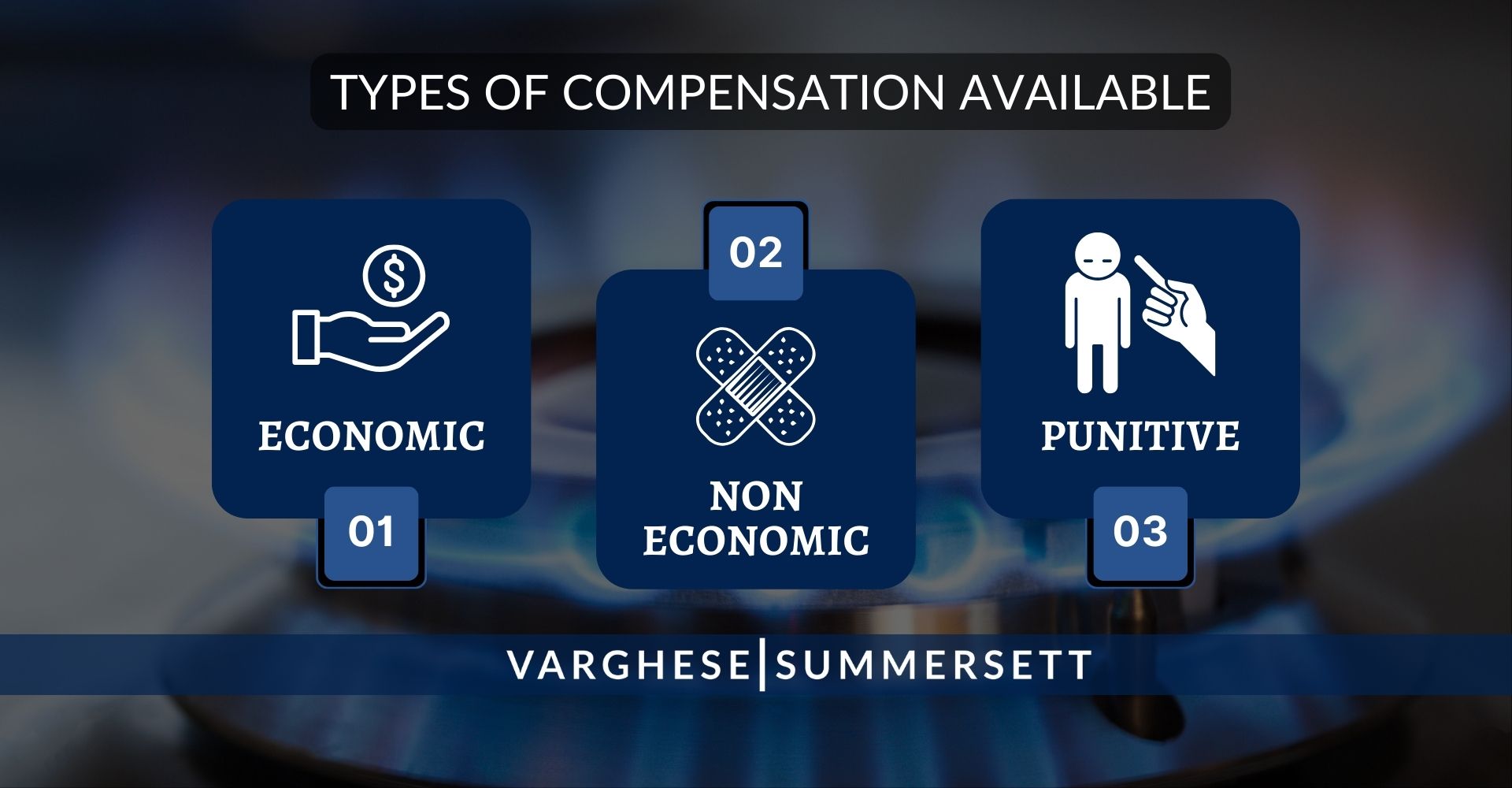
Types of Compensation Available After a Motorcycle Accident
Texas law allows injury victims to recover both economic and non-economic damages. Economic damages cover your measurable financial losses, while non-economic damages compensate for impacts that don’t come with receipts.
Medical expenses include emergency room treatment, surgeries, hospital stays, medication, physical therapy, rehabilitation, and future medical care related to your injuries. Motorcycle accidents often result in injuries requiring years of ongoing treatment.
Lost wages compensate you for income lost while recovering from your injuries. If your injuries prevent you from returning to your previous occupation, you may also recover damages for lost earning capacity.
Property damage covers repair or replacement of your motorcycle and any personal property destroyed in the accident.
Pain and suffering acknowledges the physical pain and emotional distress caused by your injuries. Texas places no cap on pain and suffering damages in most personal injury cases.
Disfigurement and disability provide additional compensation if you suffered permanent scarring, loss of limb, or other lasting physical impairment.
Loss of enjoyment of life recognizes that your injuries may prevent you from participating in activities you previously enjoyed.
Texas Statute of Limitations for Motorcycle Accident Claims
You have a limited time to file a personal injury lawsuit in Texas. Under Civil Practice and Remedies Code § 16.003, the statute of limitations for most personal injury claims is two years from the date of the accident. If you don’t file suit within this window, you lose your right to seek compensation through the court system.
Two years may sound like plenty of time, but building a strong motorcycle accident case requires gathering evidence, obtaining medical records, consulting experts, and negotiating with insurance companies. Starting the process early gives your attorney the best chance to maximize your recovery.
Certain circumstances can affect the statute of limitations. If you were injured by a government vehicle or on government property, different rules and shorter deadlines may apply. Consulting with an attorney promptly helps ensure you don’t miss any critical deadlines.

Frequently Asked Questions About Lane Splitting in Texas
Can I recover compensation if I was lane splitting when another driver hit me?
Possibly, yes. Texas’s modified comparative fault system allows you to recover damages if you were less than 51% responsible for the accident. If the other driver was negligent, such as by changing lanes without signaling, driving distracted, or violating other traffic laws, you may still have a valid claim. An experienced attorney can evaluate the specific facts of your case and advise you on your options.
Will the police automatically find me at fault if I was lane splitting during an accident?
Not necessarily. Police reports note whether drivers violated traffic laws, but they don’t make final determinations about civil liability. Officers may cite you for lane splitting while also noting the other driver’s violations. Fault for purposes of an injury claim is determined separately through the legal process.
Is lane filtering legal in Texas?
No. Lane filtering, which involves moving between stopped vehicles at intersections, is prohibited under the same statute that bans lane splitting. Texas Transportation Code § 545.0605(a)(3) specifically prohibits operating a motorcycle between lanes of traffic moving in the same direction and passing vehicles while in the same lane.
Are there any states where lane splitting is legal?
California is the only state that explicitly permits lane splitting. A few other states, including Utah, Montana, and Arizona, allow limited forms of lane filtering under specific conditions. Motorcyclists traveling through multiple states should research local laws before riding.
How much does it cost to hire a motorcycle accident lawyer?
Most personal injury attorneys, including Varghese Summersett, handle motorcycle accident cases on a contingency fee basis. This means you pay nothing upfront and no attorney fees unless we recover compensation for you. We advance all case costs and only get paid if you win.
Get Help from an Experienced Texas Motorcycle Accident Attorney
Being injured in a motorcycle accident is overwhelming, and facing insurance company tactics designed to minimize your compensation makes everything harder. If you were hurt in a lane splitting accident, or if another driver is blaming lane splitting for a crash they caused, you need an advocate who will fight for the full value of your claim.
Varghese Summersett has a team of 70+ legal professionals across four Texas offices who are ready to help. Our personal injury attorneys understand the unique challenges motorcycle accident victims face, from biased juries to aggressive insurance adjusters. We’ve recovered substantial settlements for clients even in cases where the insurance company initially denied any responsibility.
Don’t let an insurance company convince you that your injuries don’t deserve fair compensation. Contact Varghese Summersett today at (817) 203-2220 for a free consultation. We’ll review your case, explain your options, and help you understand what your claim may be worth. There’s no obligation, and you pay nothing unless we recover money for you.